For years, wall assemblies kept getting more complex. More layers. More steps. More specialized labour. But the reality on Canadian jobsites in 2026 looks very different than it did even five years ago.
The current labour shortages don’t seem to be temporary, and that reality is reshaping how commercial wall assemblies are being designed, specified, and installed. Today, the wall systems that are winning aren’t the most complicated or theoretical, they’re the ones that respect what’s actually happening on site.
Fewer hands. Tighter timelines. Higher expectations. Simplicity is competitive advantage.
The New Jobsite Reality: Doing More With Less
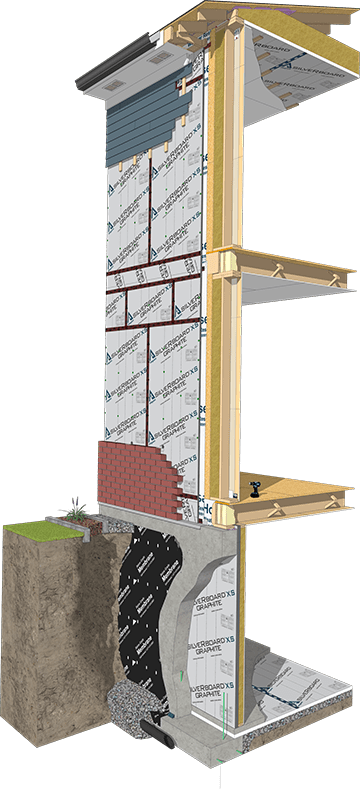
Across commercial and multi-residential construction, crews are smaller, schedules are tighter, and there’s less tolerance for mistakes. Builders don’t have the luxury of overly complicated assemblies that require perfect sequencing, specialized trades, or excessive rework. In response, designers, suppliers, and contractors are gravitating toward wall assemblies that are:
- Faster to install
- Easier to coordinate
- More forgiving on site
- Proven to perform in real Canadian conditions
This shift doesn’t mean cutting corners. It means designing smarter systems that balance performance with practicality.
Steel Framing: Predictability Matters
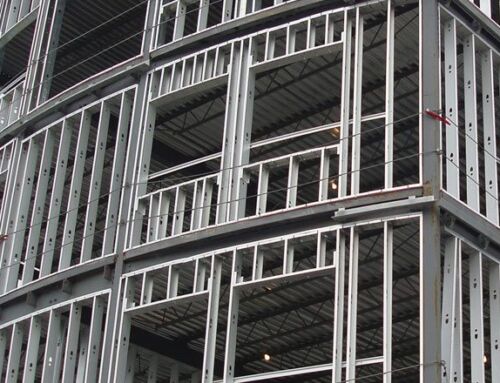
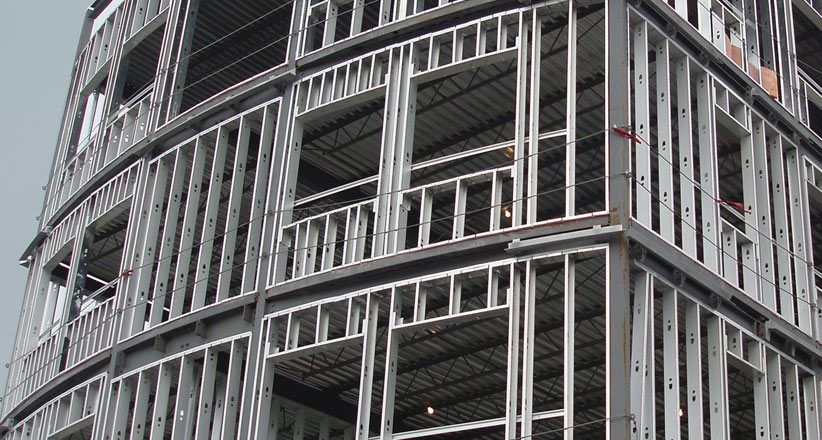
Custom cut steel framing continues to gain ground in commercial wall assemblies, not because it’s new, but because it’s consistent. From a labour perspective, custom cut steel offers major advantages:
- Uniform dimensions and straightness
- Predictable spacing and load performance
- Compatibility with prefabrication and modular construction
- Reduced callbacks caused by warping or movement
When crews are stretched thin, predictability matters. Steel framing simplifies layout, speeds up installation, and integrates cleanly with modern insulation and sheathing systems. In a labour-short market, materials that remove uncertainty are invaluable.
Insulation: Performance Without Complexity
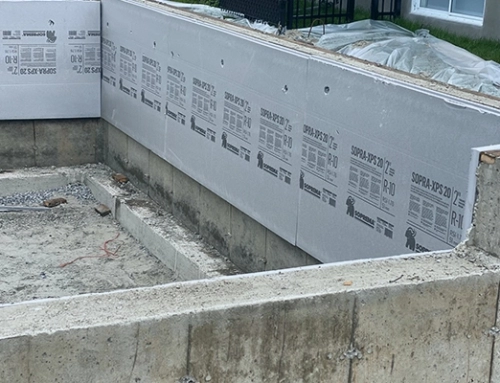
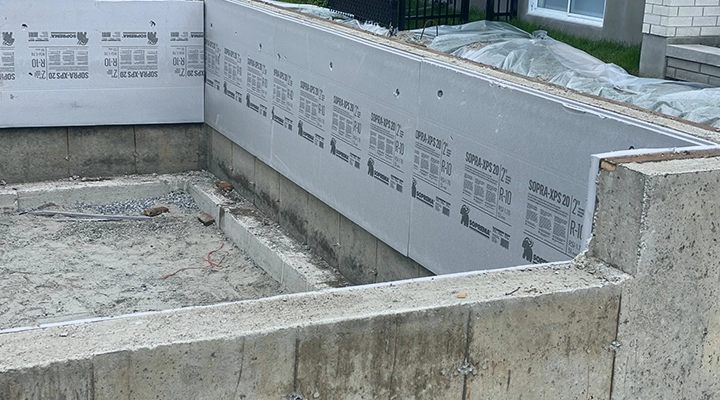
Insulation is not just about meeting code minimums, it’s about offering the best thermal performance, moisture control, and long-term durability. Rigid insulation, in particular, has become a cornerstone of simplified wall assemblies because it:
- Reduces thermal bridging
- Improves overall envelope performance
- Installs faster than multi-layer interior solutions
- Works seamlessly with steel framing systems
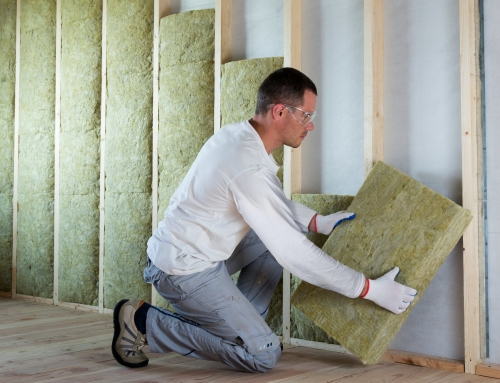
When insulation is continuous, clearly detailed, and compatible with adjacent components, it eliminates guesswork for installers and reduces the risk of on-site errors.
Exterior Sheathing: One Layer, Multiple Jobs
Modern exterior sheathing systems are doing more than just stacking multiple layers with overlapping responsibilities. Many commercial assemblies now rely on sheathing that:
- Provides structural support
- Acts as a substrate for air and vapour barriers
- Integrates cleanly with waterproofing systems
- Supports fire-resistance requirements when properly specified
- Shows up at the jobsite in exactly the dimensions required, saving time and labour during installation
Fewer layers mean fewer transitions, fewer penetrations, and fewer opportunities for mistakes. When crews are under pressure, clarity and custom beats complexity every time.
Waterproofing & Vapour Barriers: Integration Over Redundancy
Waterproofing and vapour control are critical and how they’re integrated matters more than how many products are involved. The most successful wall assemblies today prioritize:
- Clearly defined control layers
- Products designed to work together
- Simple sequencing that trades can follow without constant supervision
Integrated air and vapour barrier systems reduce install time, minimize coordination issues, and provide more reliable performance over the life of the building. In a labour-constrained environment, systems that are intuitive to install protect both schedules and performance.
Fireproofing: Built In, Not Bolted On
Fire performance is non-negotiable in commercial construction. Smarter wall assemblies incorporate fire-resistance into the system itself through:
- Proper material selection
- Tested assemblies
- Clear detailing at penetrations and transitions
When fire performance is considered early, rather than treated as an afterthought, it reduces last-minute changes and avoids costly on-site fixes.
Simplicity Isn’t About Less, It’s About Working Smarter
The wall assemblies winning in today’s market aren’t “dumbed down.” They’re refined.
They’re designed with:
- Labour availability in mind
- Real installation conditions considered
- Proven materials that work together
- Clear sequencing that crews can execute confidently
In a market defined by pressure, on labour, pricing, and timelines, simplicity is a form of risk management.
The Takeaway
Labour shortages aren’t just changing who builds our projects, they’re changing how we build them. Wall assemblies that prioritize simplicity, integration, and clarity are:
- Easier to install
- More reliable on site
- Better aligned with modern construction realities
For contractors, designers, and suppliers alike, the future isn’t about adding more layers. It’s about building systems that respect the people installing them.